
Slipped Disc? Why Physiotherapy Is the First Step to Recovery
verifiedClinical Guide Highlights
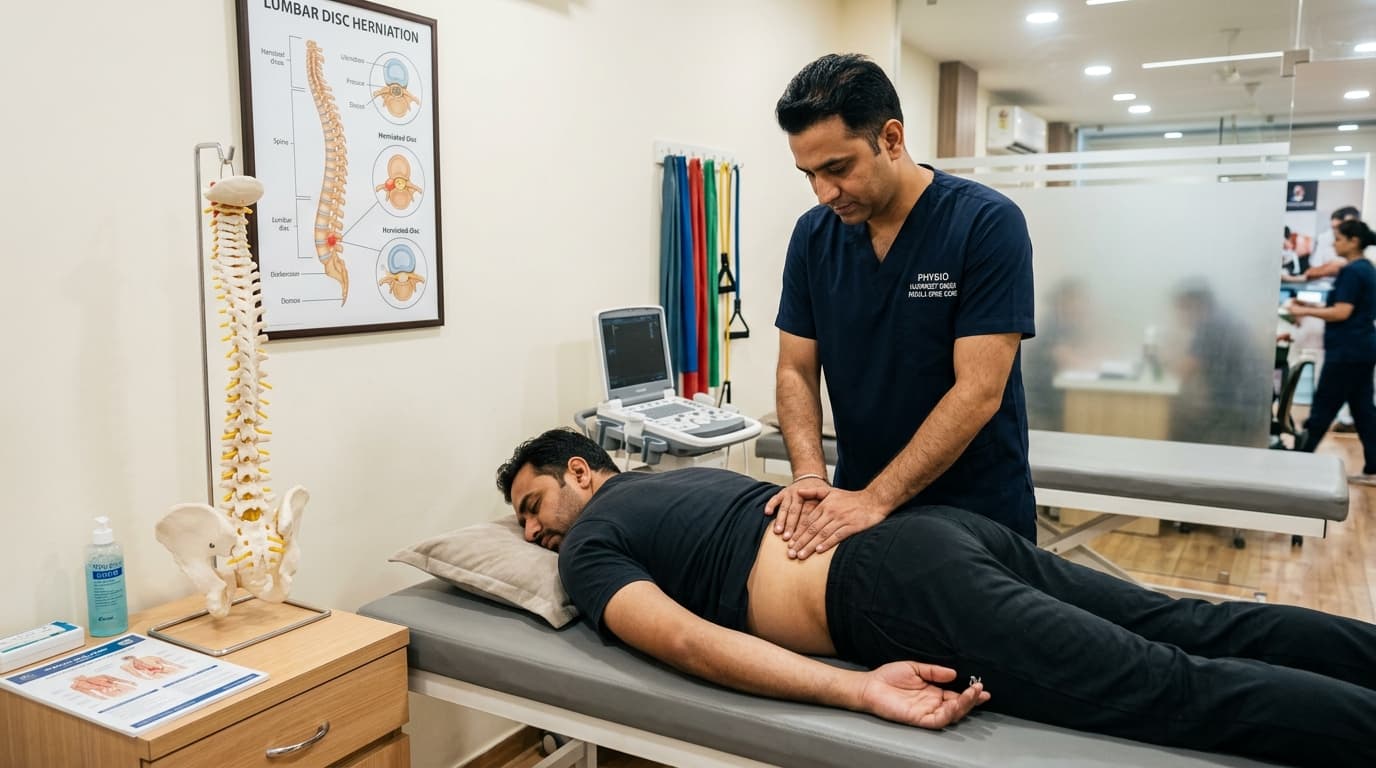
A slipped disc, also known as a herniated or prolapsed disc, is a common spinal issue that can cause intense back pain, numbness, and even weakness in the limbs. While surgery might seem like an obvious solution, physiotherapy is often the first and most recommended step towards recovery — and for good reason.
At TherapyCare.in, our certified spinal specialists formulate evidence-based non-surgical pathways to relieve nerve impingement and strengthen your vertebral support system.
What Is a Slipped Disc?
Your spine is made up of bones (vertebrae) cushioned by small, soft discs. These discs act as shock absorbers and help your spine stay flexible. A slipped disc happens when the inner soft part of the disc (nucleus pulposus) pushes out through a weak spot in the tougher outer layer, often pressing on nearby spinal nerves.
This can lead to symptoms such as:
- arrow_forwardSharp or burning back pain
- arrow_forwardTingling or numbness in the arms or legs
- arrow_forwardMuscle weakness in lower limbs
- arrow_forwardDifficulty walking, standing, or sitting
Early treatment is crucial to prevent progressive nerve damage and chronic disability.
Why Physiotherapy Is Essential for Slipped Disc Recovery
1. Pain Management Without Surgery
One of the biggest benefits of physiotherapy is that it offers natural pain relief through targeted exercises, stretching, and manual therapy — reducing inflammation and nerve pressure without the need for invasive procedures.
2. Restoring Mobility and Strength
Physiotherapists design customized programs that help strengthen the muscles supporting your spine. Improved strength and flexibility protect the disc and prevent future injuries.
3. Personalized Treatment Plans
Every slipped disc is different. Physiotherapy focuses on personalized care—your therapist assesses your specific condition and creates a recovery plan tailored to your needs.
4. Posture Correction and Ergonomics
Poor posture is often a contributing factor to slipped discs. Physiotherapists educate patients on proper posture, lifting techniques, and lifestyle modifications to avoid worsening the problem.
5. Speeding Up Healing
Through techniques like electrotherapy, dry needling, ultrasound therapy, and spinal mobilization, physiotherapy speeds up tissue healing and promotes a quicker recovery.
For patients struggling with back pain, specialized programs like back pain physiotherapy in Patiala provide targeted exercises and home treatments that make a big difference.
Common Physiotherapy Treatments for Slipped Disc
At TherapyCare.in, known as the leading provider of clinical rehabilitation in Patiala, physiotherapy sessions may include:
These methods not only treat the acute symptoms but also address the root mechanical cause to ensure permanent, long-term recovery.
When to Start Physiotherapy?
It’s important to start physiotherapy as soon as a slipped disc is diagnosed. Early intervention reduces pain faster and prevents further damage. If you’re experiencing chronic back pain, numbness, or limited mobility, consulting a trained physiotherapist in Patiala can make a significant difference.
Why Choose TherapyCare.in for Slipped Disc Treatment?
At TherapyCare.in, our experienced physiotherapists specialize in treating slipped discs and other complex spinal issues using evidence-based techniques. We focus on non-invasive recovery, patient education, and strengthening the body to minimize future risk.
Frequently Asked Questions (FAQs)
Avoid heavy forward bending, twisting under load, or prolonged uninterrupted sitting during the acute phase of a slipped disc. Regular short walks and gentle lumbar extension exercises maintain spinal health.
Take the First Step Towards a Pain-Free Life Today
Get in touch with TherapyCare.in today and experience non-surgical slipped disc recovery in Patiala. Our certified clinical specialists are ready to guide you back to pain-free movement.